India-US Trade Standoff: Modi's 'Missed Call' Sparks 500% Tariff Threat

Overview
US Commerce Secretary Howard Lutnick claims a trade deal collapse due to PM Modi's unmade call to President Trump. This coincides with a proposed US bill threatening 500% tariffs on goods from India, China, and Brazil if they engage with Russian petroleum products. Reliance Industries is reportedly seeking US clearance for Venezuelan crude imports amid these escalating trade and energy geopolitical tensions.
Stocks Mentioned
Diplomatic Dispute Erupts Over Trade Deal
Geopolitical tensions flared this week as U.S. Commerce Secretary Howard Lutnick asserted that a significant trade agreement between the United States and India collapsed because Prime Minister Narendra Modi declined to personally telephone President Donald Trump to finalize the deal. Lutnick alleged that Indian officials were hesitant, leading India to 'miss the train' on agreements secured by nations like Vietnam and the Philippines. New Delhi swiftly rejected this narrative.
The Ministry of External Affairs (MEA) officially labeled Lutnick's claims as 'not accurate,' stating that Prime Minister Modi and President Trump engaged in eight separate phone conversations during 2025 alone. The MEA maintained India's readiness to conclude a mutually beneficial trade pact, attributing delays to reasons other than a lack of leadership communication. This diplomatic spat introduces significant uncertainty into bilateral trade relations.
Looming Tariff Threat
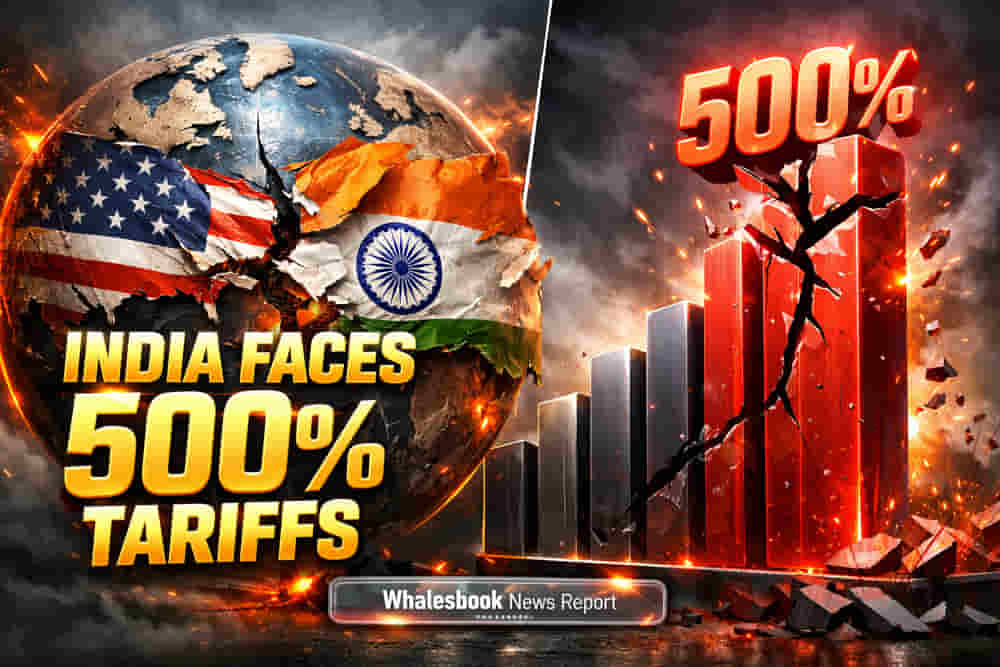
Adding to the friction, Senator Lindsey Graham announced that President Trump has endorsed legislation mandating a steep tariff increase. The proposed bill targets imports from Russia with a minimum 500% duty. More critically for New Delhi, it casts a wide net, identifying India, China, and Brazil as potential targets if they are found to 'knowingly engage' in transactions involving Russian-origin petroleum products. Currently, Indian goods face a 50% duty, a combination of reciprocal and punitive levies linked to India's ongoing procurement of Russian oil.
Energy Geopolitics Shift
Amidst evolving energy dynamics, India is exploring alternatives to sanctioned Russian barrels. Reliance Industries, a major private crude importer, is reportedly in active discussions with U.S. State and Treasury Departments. The objective is to secure approval for resuming purchases of Venezuelan crude oil. This development follows recent U.S. military actions in Venezuela and suggests a Washington-controlled energy corridor that could benefit India.
Market Reaction
The escalating geopolitical uncertainties and trade disputes have rattled Indian markets. Equity benchmarks, the Sensex and Nifty, extended their decline for a fifth consecutive session on Friday, marking their worst weekly performance in over three months. Investor sentiment remains subdued as concerns mount over the potential economic fallout from these international trade conflicts.