US Nears Taiwan Trade Deal: TSMC Boosts Chip Investment in America

Overview
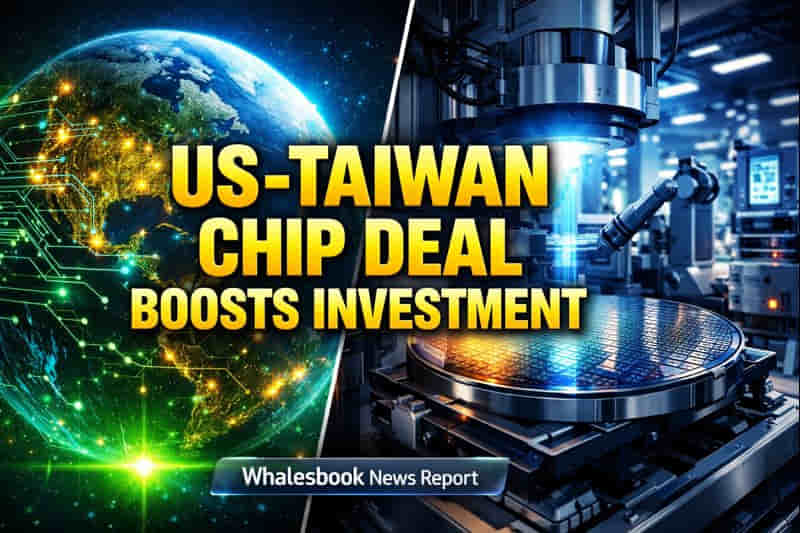
The U.S. is close to a trade agreement with Taiwan, poised to slash import duties on Taiwanese goods from 20% to 15%. This deal includes a massive expansion of Taiwan Semiconductor Manufacturing Co.'s (TSMC) chip production facilities in Arizona. TSMC plans to build at least four additional advanced chip factories, potentially committing over $100 billion more to its U.S. operations, driven by geopolitical tensions with China.
Trade Deal Nears
The Trump administration is reportedly close to finalizing a trade agreement with Taiwan. This pact aims to significantly reduce U.S. import duties on Taiwanese goods and secure substantial new investment in American semiconductor manufacturing from Taiwan Semiconductor Manufacturing Co. (TSMC).
Tariff Reductions and Investment Boost
Under the proposed terms, import tariffs on Taiwanese shipments to the U.S. would fall from the current 20% to 15%. This rate would align Taiwan's trade terms with those of Japan and South Korea, which also recently secured similar trade agreements.
TSMC, the world's leading advanced chip producer, is expected to commit to constructing at least four additional semiconductor fabrication facilities in Arizona. This expansion would build upon TSMC's existing plans for six chip factories and two advanced packaging facilities in the state. The total new investment from TSMC for these additional fabs could exceed $100 billion, with completion targeted for the 2030s.
Geopolitical Context and Policy Wins
The accelerated negotiations and potential agreement are occurring against a backdrop of increased military activity by China towards Taiwan. U.S. officials have voiced concerns over the global supply chain's dependence on Taiwan for cutting-edge semiconductors.
For the Trump administration, this accord would offer another tangible win for its "America First" trade policy. It highlights the administration's focus on securing overseas manufacturing commitments and bolstering domestic industrial capacity in critical sectors.
Representatives from the Commerce Department, the U.S. Trade Representative's office, the White House, and TSMC did not immediately respond to requests for comment. Taiwan's economic representative office in the U.S. also declined to comment on the ongoing negotiations. The deal, if finalized, would mark a significant development in U.S.-Taiwanese economic relations and global semiconductor strategy.