Budget 2026: India's Education Quality Crisis Looms Amid Enrollment Surge

Overview
Ahead of Budget 2026, experts urge India to prioritize quality education and infrastructure over mere enrollment expansion. Despite a rising Gross Enrolment Ratio and increased budget allocation, critical facilities like labs and hostels lag. The government faces pressure to invest in future-ready skills, digital transformation, and capacity building to strengthen human capital and meet the demands of a knowledge-driven economy.
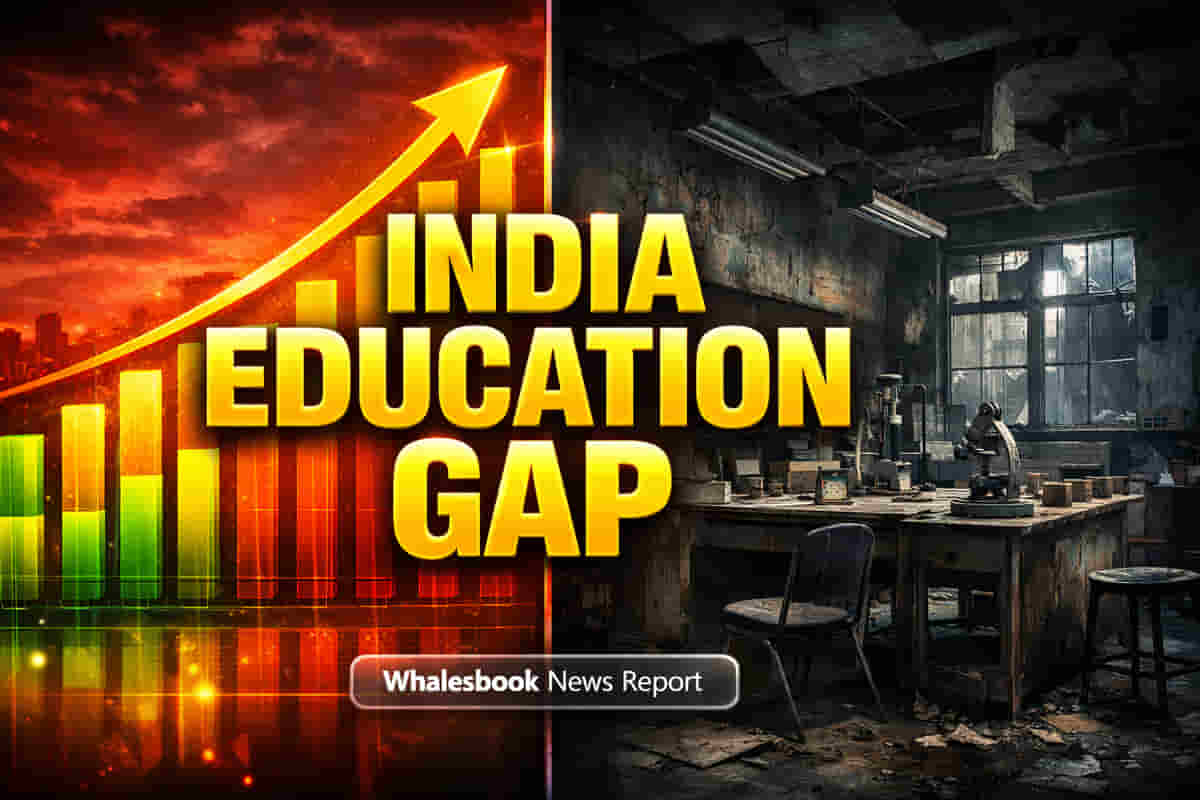
Budget 2026: Experts Warn of Quality Gap as Enrollment Surges
As India gears up for the Union Budget 2026, education experts are calling for a critical shift in focus from simply expanding college enrollment to significantly enhancing the quality of education and bolstering crucial infrastructure. With India boasting the world's second-largest education system and a young demographic, the upcoming budget is seen as a pivotal moment to address systemic challenges.
The Enrollment Surge
The nation's higher education system has seen substantial growth, with the number of institutions increasing by 13.8% over the last eight years. Concurrently, the Gross Enrolment Ratio (GER), which measures the percentage of students in higher education relative to the eligible population, climbed from 23.7% to 28.4% in the same period. The previous budget allocated ₹1.28 lakh crore to the education sector, with ₹50,077.95 crore earmarked specifically for higher education, marking a 6.22% increase.
Experts Sound Alarm on Quality Gap
Despite this expansion in access, experts like Pankaj Priya, deputy director and dean (academics) at BIMTECH, caution that fundamental infrastructure development has not kept pace. "Access has expanded, but infrastructure such as labs, hostels and student facilities has not kept pace with enrolment growth," Priya stated. The call is for the next phase of reform to concentrate on capacity-building, deep research, and demonstrable employability outcomes, moving beyond mere expansion.
Future-Ready Skills Imperative
Dr. P R Sodani, president of IIHMR University, emphasized that higher public investment is vital for strengthening human capital. Spending should target skill development, digital transformation, and institutional capacity building. Furthermore, experts stress the need to align academic curricula with emerging technologies like generative AI and machine learning, in line with the National Education Policy 2020 objectives. Failure to do so risks leaving graduates unprepared for a rapidly evolving, knowledge-driven global economy.