Global Oil Map Redrawn: Venezuela, Arctic, Greenland Emerge as Geopolitical Hotspots

Overview
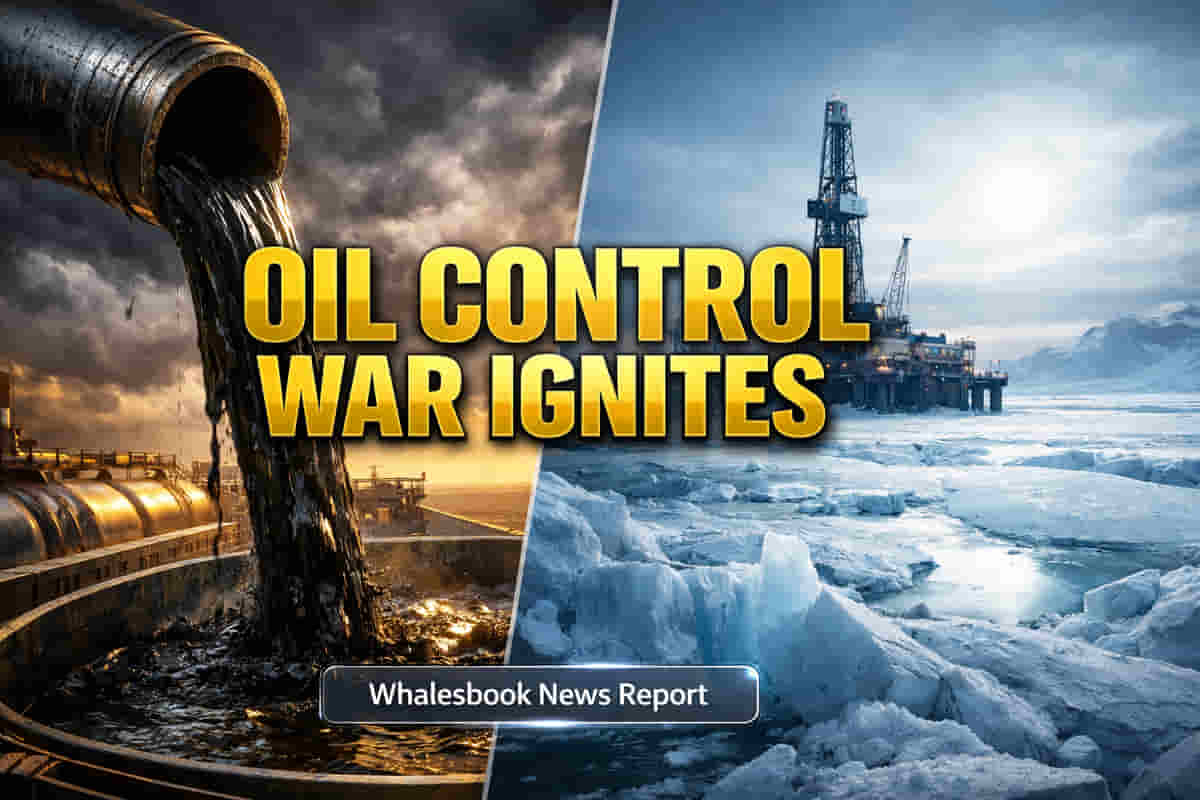
Decades of market-driven oil pricing are giving way to geopolitical control. Venezuela, holding the world's largest reserves, sees renewed strategic importance despite infrastructure woes, while the Arctic's vast untapped hydrocarbon potential, controlled largely by Russia, draws increasing interest from the US and Norway. Greenland also emerges as a critical, resource-rich zone, shifting the global energy map toward power plays over supply.
Venezuela's Oil Resurgence
Decades of mismanagement and sanctions have crippled Venezuela's oil output, yet its position remains strategically vital. The nation holds roughly 303 billion barrels of oil, approximately 17% of the global total. Recent geopolitical maneuvers by the United States aim to reassert influence, potentially altering trade flows and limiting rivals like China's access to these crucial reserves.
The Arctic Frontier Beckons
The Arctic, once deemed inaccessible, is now a prime target for hydrocarbon exploration. With an estimated 240 billion barrels of oil and gas, it represents one of the planet's last major frontiers. Russia currently dominates production, but Norway and the United States are aggressively pursuing their own stakes. Extracting oil here is costly, with prices nearing $75 per barrel, significantly higher than conventional sources. Environmental concerns loom large, as increased drilling threatens the fragile Arctic ecosystem and exacerbates climate change.
Greenland's Strategic Pivot
Greenland is no longer just a joke about territorial acquisition; it's a nexus of resource control and strategic positioning. Geological surveys suggest tens of billions of barrels of oil equivalent lie offshore. Despite a government ban on new exploration due to climate concerns and high costs, melting ice is opening seasonal shipping routes and revealing access to vital minerals for clean energy supply chains. Control of Greenland is increasingly tied to future global trade and energy dominance.