Founder's $250M Test: S&P 500 Beats Goldman Sachs, Personal Picks

Overview
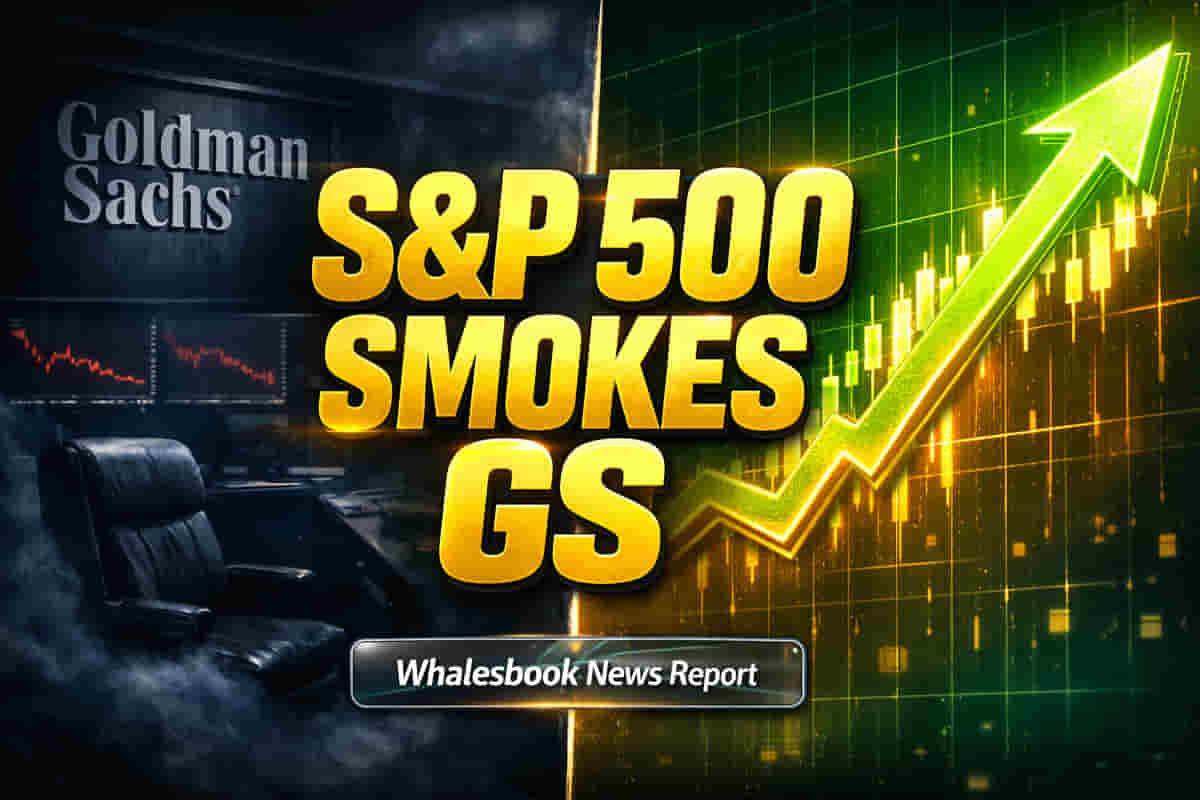
Tech founder Ankur Nagpal revealed a five-year investment experiment comparing Goldman Sachs management, his personal venture and crypto portfolio, and the S&P 500 index fund. The results showed the S&P 500 index fund delivered an 18% annual return, significantly outperforming Goldman Sachs' 10% IRR and Nagpal's self-managed 14% IRR. Nagpal plans to shift new assets to direct index investing, highlighting the cost of active management.
Ankur Nagpal's $250M Investment Experiment: S&P 500 Dominates
Tech entrepreneur Ankur Nagpal, who achieved a significant financial milestone by selling his startup Teachable for approximately $250 million, has publicly shared the outcome of a rigorous five-year investment experiment. The results are a striking testament to passive investing, revealing that a simple S&P 500 index fund far surpassed both a portfolio managed by financial giant Goldman Sachs and Nagpal's own actively managed collection of venture capital, stocks, and cryptocurrency.
The Setup
Upon realizing his substantial exit in 2020, Nagpal opted for a dual strategy with his newfound capital. He entrusted 50% of the proceeds to Goldman Sachs for professional wealth management, while retaining the other half to manage personally. This personal allocation was diversified across venture investments, individual stock picking, and the volatile cryptocurrency market.
Performance Discrepancies
The experiment yielded compelling data. Nagpal's engagement with Goldman Sachs resulted in an annualized Internal Rate of Return (IRR) of 10% over the five-year period. His self-directed portfolio performed more robustly, achieving a 14% IRR. This growth was significantly influenced by substantial gains in cryptocurrency assets and strong venture returns, though it was tempered by considerable underperformance in individual stock picks during 2021 and 2022.
The Index Fund Victory
However, the undisputed champion of the experiment was the S&P 500 index fund. This passive investment vehicle delivered an impressive 18% IRR during the same timeframe. Nagpal pointed to the substantial impact of fees, noting approximately $3,000 in annual management fees paid to Goldman Sachs, alongside percentage-based product fees. He specifically cited a small-cap fund within the managed portfolio that carried a 1.5% expense ratio yet returned a mere 7%.
Future Strategy
Nagpal expressed his intention to bypass intermediaries for the majority of his new assets moving forward. His plan to 'direct index' signifies a shift towards lower-cost, passive investment strategies, aiming to retain more of his investment gains by avoiding the fees and potential underperformance associated with active management and professional services.