Boeing Tackles Safety Crisis: Inside Fixes on Assembly Lines

Overview
CNBC-TV18 toured Boeing's U.S. factories, revealing intensified efforts to rectify safety and quality failures plaguing the 737 Max and other programs. The company is slowing production, enhancing inspections, and boosting worker training to rebuild trust amid stringent regulatory oversight.
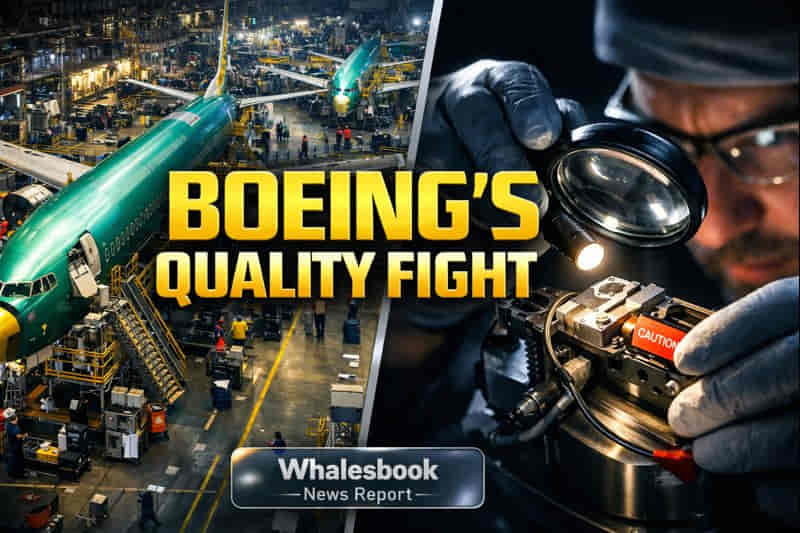
Boeing is confronting its most severe crisis in years, marked by safety lapses and manufacturing defects. CNBC-TV18 gained exclusive access to the company's U.S. production facilities, from Seattle to South Carolina, to witness firsthand the ongoing efforts to bolster safety oversight and quality control.
Renton Facility Focus
In Renton, Washington, the assembly of the 737 Max, a program central to Boeing's recent troubles, is undergoing significant changes. Production has been intentionally slowed to approximately 42 aircraft per month, down from a capacity of 63. This deliberate reduction in pace allows for more time dedicated to inspections, quality checks, and heightened regulatory oversight. Boeing reports that a safety and quality plan enacted in March 2024 is yielding results, with a reported 40% decrease in assembly line defects and a nearly 60% reduction in outstanding jobs nearing final assembly.
Everett and Charleston Operations
The tour extended to Everett, home to wide-body aircraft like the 777 family, and Charleston, South Carolina, where the 787 Dreamliner is produced. These facilities highlight the immense complexity of modern aerospace manufacturing, involving millions of parts sourced globally. Boeing is implementing tighter process controls and deeper checks across these lines to mitigate risks associated with this intricate supply chain.
The 787 Dreamliner assembly in Charleston emphasizes precision, especially with its extensive use of lightweight composite materials. Each Dreamliner moves through four final assembly positions, with seven to eight aircraft assembled or delivered monthly.
Rebuilding Confidence
Across all sites, Boeing states it is prioritizing worker training and fostering an environment where employees can report quality issues without fear of reprisal. The company's strategy emphasizes early problem detection and consistent standards. The ultimate measure of these extensive reforms will be the sustained quality and safety of the aircraft delivered to customers.