SC Split Verdict: Prior Sanction Law for Public Servants Under Fire

Overview
The Supreme Court has delivered a split verdict on Section 17A of the Prevention of Corruption Act, which requires prior government approval to investigate public servants. One judge found it unconstitutional, while another deemed it valid only if Lokpal/Lokayukta recommend the probe, impacting anti-graft measures and governance.
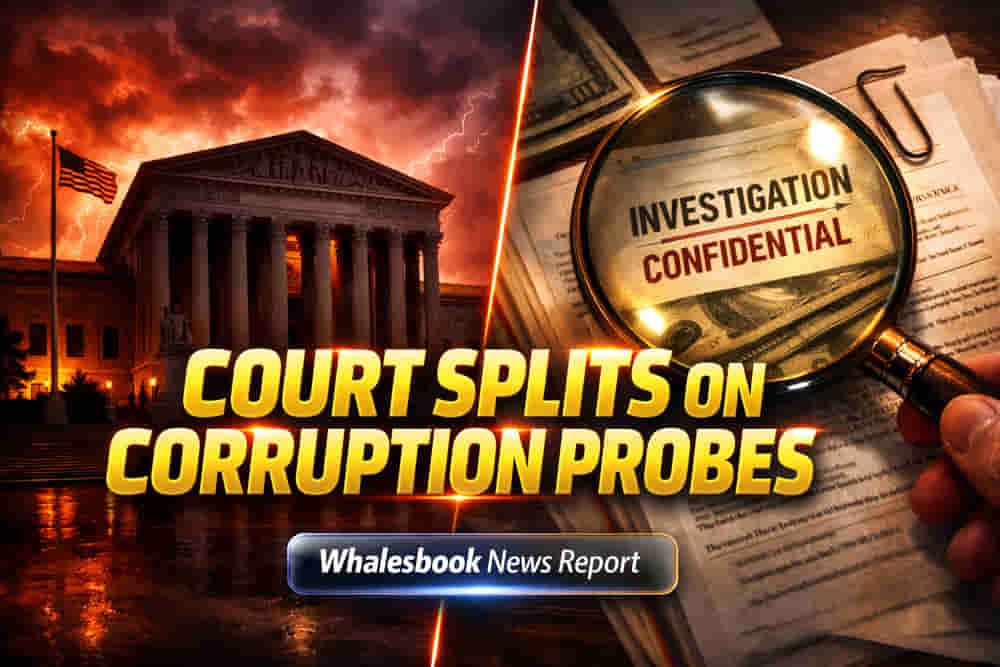
Supreme Court Delivers Split Verdict on Prior Sanction for Public Servant Probes
The Supreme Court on Tuesday issued a divided ruling concerning Section 17A of the Prevention of Corruption (PC) Act. This provision mandates prior approval from the Union or State government before investigating public servants for offenses linked to their official functions.
Justice Nagarathna Declares Section Unconstitutional
Justice BV Nagarathna asserted that Section 17A is arbitrary and an attempt to shield the corrupt. She declared the provision unconstitutional, stating that no prior approval is necessary for investigations. The judge expressed concern that governmental approvals might not be granted, thereby defeating the Act's purpose and thwarting allegations of corruption at the outset.
Justice Viswanathan Proposes Lokpal/Lokayukta Oversight
Conversely, Justice KV Viswanathan ruled that Section 17A is constitutionally valid, provided that prior approval is contingent upon the recommendation of the Lokpal or Lokayukta, rather than the government. He argued that striking down the section entirely would be an overreaction, suggesting that forwarding complaints to these independent bodies offers a constructive solution to prevent potential abuse while enabling necessary inquiries.
Legal Challenge and Context
The provision, introduced in 2018, was challenged by the Centre for Public Interest Litigation (CPIL). Advocate Prashant Bhushan represented CPIL, while Solicitor General Tushar Mehta appeared for the Union government. The differing opinions highlight the ongoing debate surrounding the balance between accountability and protection for public officials.