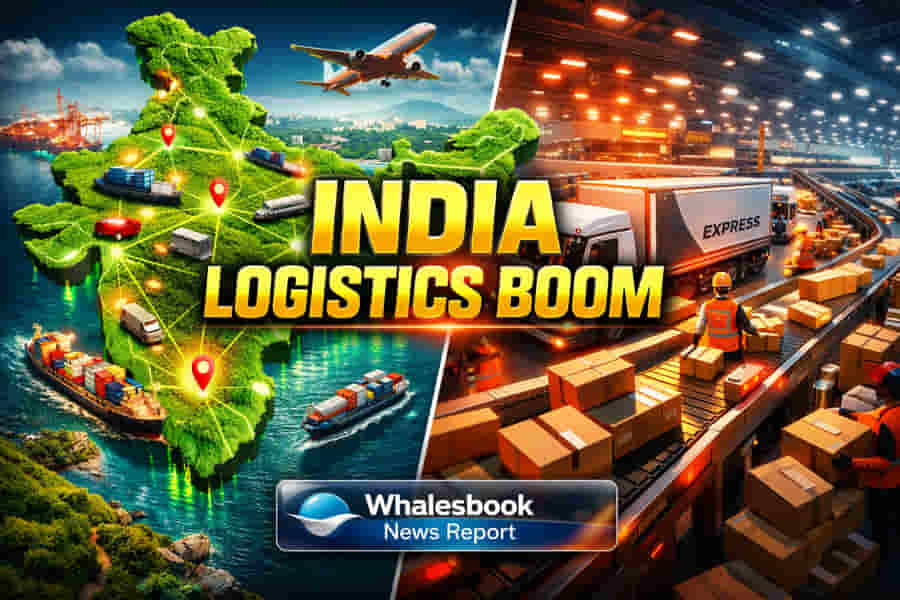
India Logistics Boom: Blue Dart Data Signals Sector Inflection Point

Overview
India's logistics sector surged in 2025, data from Blue Dart reveals, marking an inflection point. Volumes doubled on peak days, and network complexity grew, positioning express logistics as critical national infrastructure supporting diverse sectors beyond e-commerce. This shift demands greater resilience and efficiency from operators.
Stocks Mentioned
Logistics Sector Hits Inflection Point in India
India’s logistics sector crossed a significant threshold in 2025, with operational data from Blue Dart highlighting an inflection point driven by booming volumes, expanded routes, and increased shipment complexity. This evolution is transforming express logistics from a mere e-commerce support function into core national infrastructure.
Record Volumes and Network Strain
Blue Dart recorded 20 separate days in 2025 when shipment volumes were double the daily average, demonstrating that peak demand is no longer restricted to festival seasons. The busiest day saw over 14,000 tonnes move through the network, contributing to a full-year total of 47 million secured parcels. This surge reflects not only consumer demand but also growing B2B movement of financial documents, regulated cargo, and medical supplies.
Such consistently high volumes place sustained pressure on networks, reducing the system's capacity to absorb disruptions. Blue Dart's road operations covered more than 2 billion kilometers in 2025, a figure that underscores a deeper cost challenge.
Evolving Demands Beyond E-commerce
What distinguished 2025 was the intensity of infrastructure utilization. Logistics assets now operate around the clock to support time-bound deliveries across banking, healthcare, and industrial segments. The sector is increasingly handling shipments with critical consequences if they fail, including temperature-sensitive medical supplies like insulin and plasma, and even cell and gene therapies. Liquid nitrogen consignments at –196° C and deliveries to high-altitude Leh further illustrate the expanded operational breadth expected from express players.
These specialized services offer higher yields but also entail elevated compliance costs, specialized infrastructure, and heightened operational risks.
Challenges in Tier II Expansion
Growth is increasingly originating from Tier II cities, which accounted for approximately 60% of shipment volume increases in 2025. This trend structurally raises fuel costs, transit times, and last-mile complexity due to lower drop densities and longer average delivery distances. Balancing service parity with cost discipline in these markets, where customers expect metro-level standards without commensurate price hikes, presents a significant challenge for logistics firms.
Furthermore, the shift towards fully digital customer onboarding, with shipping accounts activated in about 90 seconds, accelerates access for SMEs and D2C brands. This compresses sales cycles but increases exposure to credit and compliance risks.
The Future of Indian Logistics
The 2025 numbers firmly position the logistics sector as mission-critical to India’s economy. The next phase of competition will likely hinge not on speed alone, but on profitability, robust risk management, and the ability to handle increasing complexity at scale. The experience of long-serving employees, like Blue Dart's over 600 staff with 25+ years tenure, will be crucial in embedding operational continuity into evolving automated systems.