India's Invisible Water Drain: Billions of Liters Exported Via Crops

Overview
Water-stressed India is a major exporter of 'virtual water' embedded in water-intensive crops like rice and sugarcane. Annual exports of billions of liters of embedded water strain scarce resources, particularly in states like Maharashtra, Punjab, and Haryana. This paradox highlights policy challenges, prompting calls for sustainable export strategies, crop diversification, and better water management.
The Invisible Drain
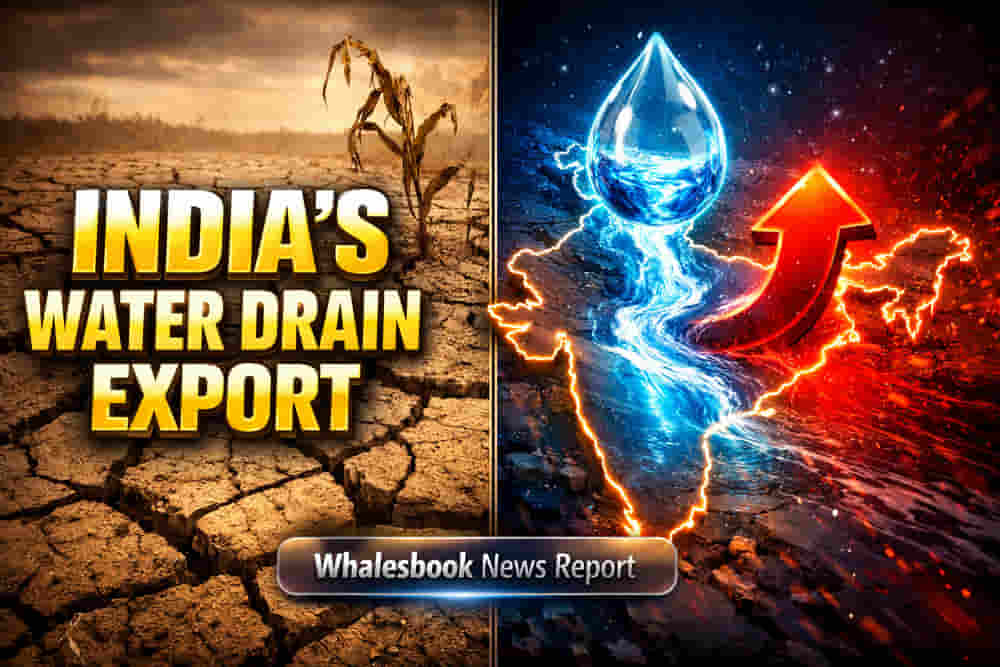
India, despite facing significant water scarcity, ranks among the world's largest exporters of 'virtual water'—the water embedded within exported agricultural products. This phenomenon sees billions of liters of precious water leaving the country, primarily through water-intensive crops like rice and sugarcane.
Scale of the Problem
Research indicates India exported an average of 26 billion liters of virtual water annually between 2006 and 2016. More recent figures suggest that rice exports alone in 2023-24, amounting to approximately 16 million tonnes, represent a drain of about 40 billion cubic meters, or 17% of the country's annual groundwater extraction.
Sugarcane's Shadow
Sugarcane, a particularly thirsty crop demanding 1,500 to 3,000 liters of water per kilogram, presents a severe challenge. In Maharashtra, prone to drought, producing one kilogram of sugar can consume 2,450 liters of water, far exceeding the 990 liters needed in Uttar Pradesh. This crop, cultivated on a mere 3-4% of Maharashtra's farmland, accounts for a disproportionate 60-70% of the state's irrigation water, often driven by political patronage and assured procurement, even during drought years. Approximately 775,000 tonnes of sugar were exported in 2024-25, further draining water from scarce regions.
Policy Paradoxes
India's agricultural policies, designed for food security, inadvertently promote virtual water exports from stressed regions. The Minimum Support Price (MSP) regime heavily favors water-intensive crops like rice and wheat, leading to monoculture and unsustainable groundwater depletion. States like Punjab and Haryana continue extensive paddy cultivation despite groundwater extraction rates exceeding sustainable recharge by 164% and 136% respectively, resulting in the loss of billions of cubic meters of groundwater between 2003 and 2020.
Towards Sustainable Exports
While agricultural exports generated $41.25 billion in 2020-21 and support livelihoods, the focus must shift to sustainability. Experts propose channeling water-intensive exports from regions with better water endowments. Schemes like Haryana's 'Mera Pani Meri Virasat', which incentivizes farmers to shift from paddy to less water-guzzling crops, offer a model. Expanding the MSP basket to include millets, pulses, and oilseeds, complemented by income support like PM-KISAN, could encourage diversification. Technological interventions such as metered electricity, micro-irrigation, System of Rice Intensification, and Alternate Wetting and Drying techniques can reduce water usage by 30-40% without impacting yields. The ultimate goal is to export prosperity, not precious water.