RBI Governor Defends Rupee, Cites Strong Indian Economic Health

Overview
RBI Governor Shaktikanta Das asserted that a nation's strength isn't solely defined by its currency's exchange rate. He highlighted India's robust economic fundamentals, including high growth, stable inflation, and strong foreign reserves, as key indicators of its resilience. Das emphasized the central bank's consistent policy of allowing market forces to determine the rupee's value, while expecting continued quality foreign investment.
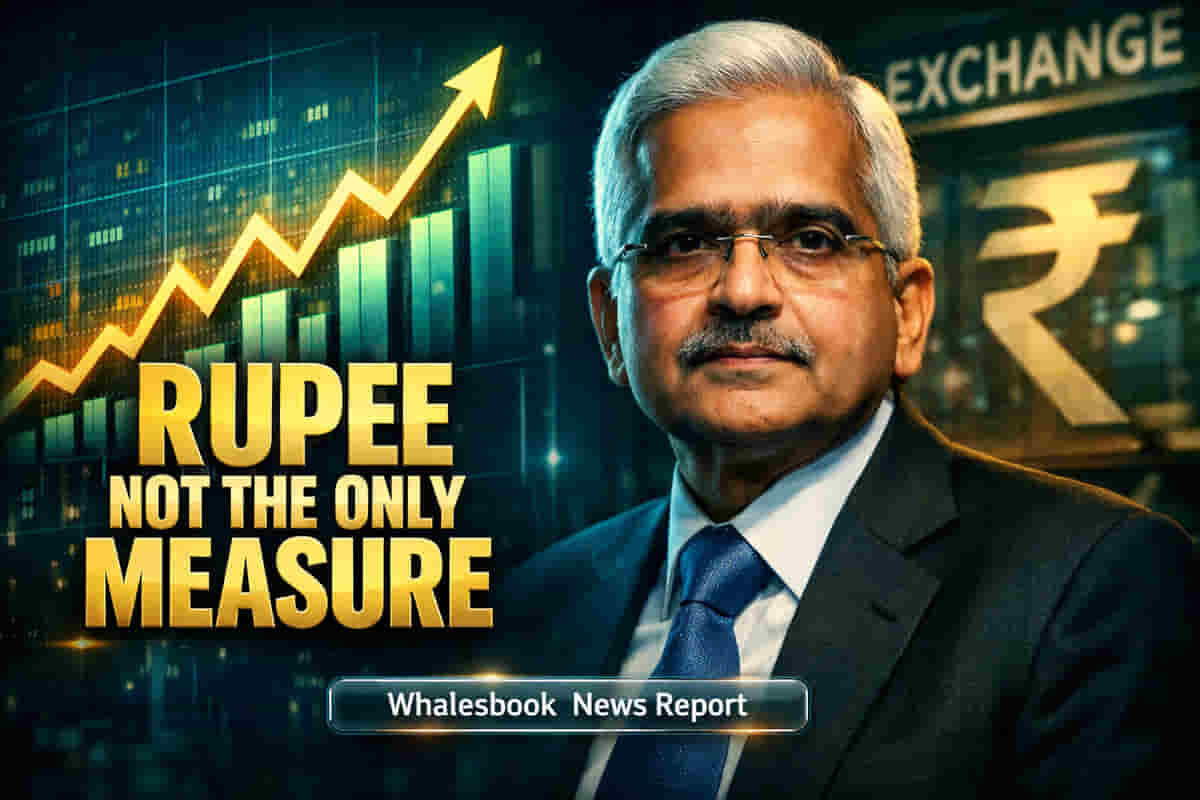
Rupee Strength Linked to Fundamentals, Not Just Exchange Rate
MUMBAI – Reserve Bank of India (RBI) Governor Shaktikanta Das on Monday pushed back against judging India's economic might solely by its currency's exchange rate. He argued that robust economic fundamentals, including high growth, low inflation, financial stability, and substantial foreign exchange reserves, paint a more accurate picture of the nation's strength.
Das made these remarks in response to questions about the rupee's exchange rate, which has hovered around 90 to the dollar. He assured that the rupee's movement has remained orderly and avoided excessive volatility. This defense underscores the central bank's consistent stance that market forces should dictate the rupee's valuation.
Market-Determined Exchange Rate Policy
"We believe that the markets are quite robust, they are quite deep, they are quite wide. And so, we believe the markets will ultimately determine the prices," the RBI chief stated. This policy reinforces the central bank's commitment to minimal intervention, trusting the depth and breadth of India's financial markets.
Foreign Investment Outlook Remains Positive
India is anticipated to continue attracting significant foreign investments, buoyed by strong domestic growth prospects. Governor Das pointed to recent free trade agreements and substantial investment commitments from global tech giants like Amazon, Google, and Microsoft as indicators of this positive trend. While acknowledging that these inflows may not be perfectly uniform year-on-year, he expects continued attraction of quality, long-term capital across various sectors.
These inflows, Das clarified, are not driven by short-term speculation but by a recognition of India's sector resilience and long-term growth trajectory. "Investors—both foreign and domestic—are attracted by the sector's resilience and India's long-term growth prospects," he noted, characterizing the capital as "long-term, patient capital."
Inflationary Concerns Subside
Regarding inflation, the RBI governor indicated that consumer price increases are currently low, partly due to favorable base effects from food prices and subdued global commodity prices. Projections suggest inflation is trending towards a comfortable 3-4% range. Core inflation also remains well-managed, leading the central bank to express comfort with the current inflationary levels. Official data showed India's consumer inflation stood at 1.3% in December, a three-month high.