Trump Slaps 25% Tariff on Iran Trade: India, China Face Economic Fallout

Overview
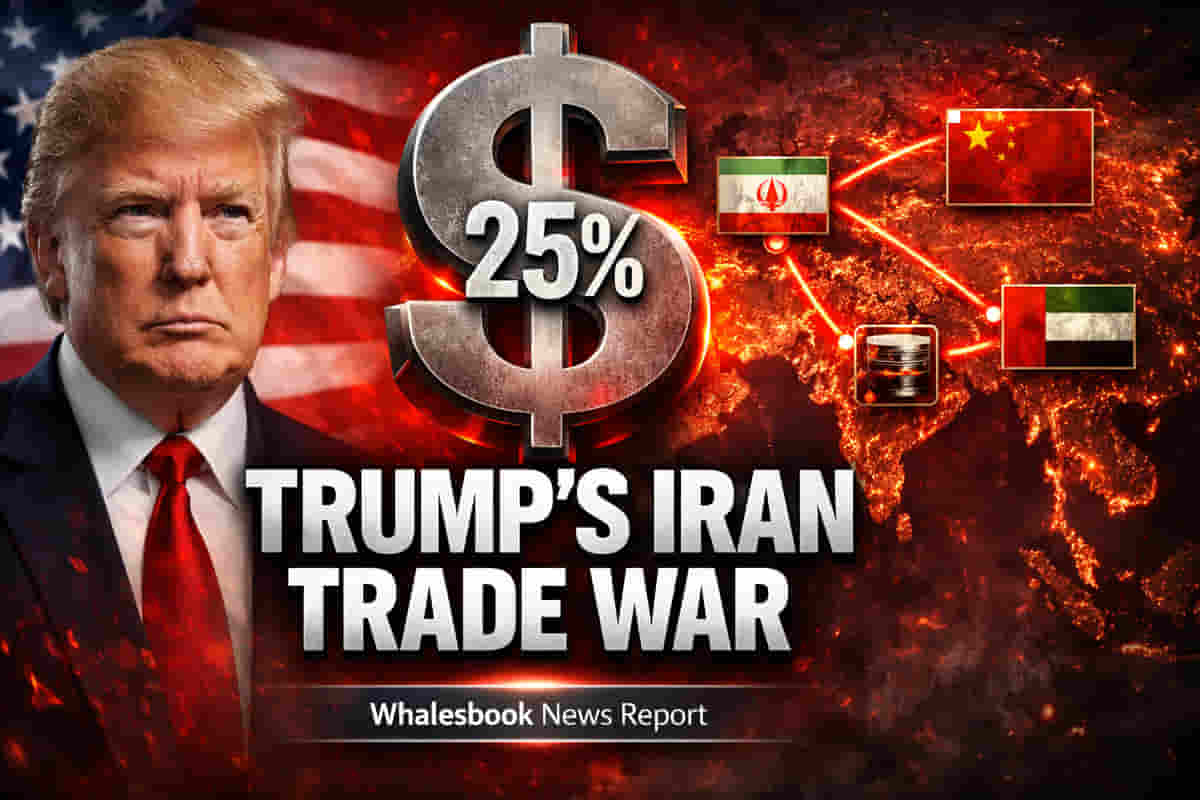
President Donald Trump has imposed a sweeping 25% tariff on any nation conducting business with Iran, directly impacting key trade partners like India, China, and the UAE. Beijing vehemently opposes the move, calling it unilateral coercion. The directive could significantly alter global trade dynamics and strain economic relations.
New Trade Tensions Emerge
US President Donald Trump announced an immediate, non-negotiable 25% tariff on all business conducted with Iran by any country. The order, posted on his Truth Social platform, targets major trading partners including India, China, and the United Arab Emirates. This aggressive trade stance signals a new challenge for nations heavily involved in commerce with Tehran.
China's Strong Opposition
Beijing reacted swiftly and critically, reiterating its stance against unilateral sanctions and trade wars. A spokesperson for the Chinese embassy in Washington stated that coercion and pressure are not solutions, and China will defend its legitimate interests. This opposition highlights the growing geopolitical friction surrounding US trade policy.
India's Trade Ties at Risk
India, consistently among Iran's top trading partners, faces potential economic disruption. The U.S. has previously imposed tariffs on Indian goods, including levies on energy imports. According to the Observatory of Economic Complexity, India's exports to Iran totaled $1.19 billion in 2023, with key items including rice, soybean meal, and bananas. Imports from Iran amounted to $1.02 billion, primarily acyclic alcohol derivatives.
Chabahar Port Link
Despite potential trade hurdles, India and Iran maintain significant historical and strategic ties, including the joint development of the Chabahar port. India Ports Global Limited (IPGL) has secured a ten-year contract to operate a terminal at the port, a critical piece of infrastructure for regional connectivity.