Meesho Faces 'Reduce' Call as Valuations Outpace E-commerce 'Flagbearer' Status

Overview
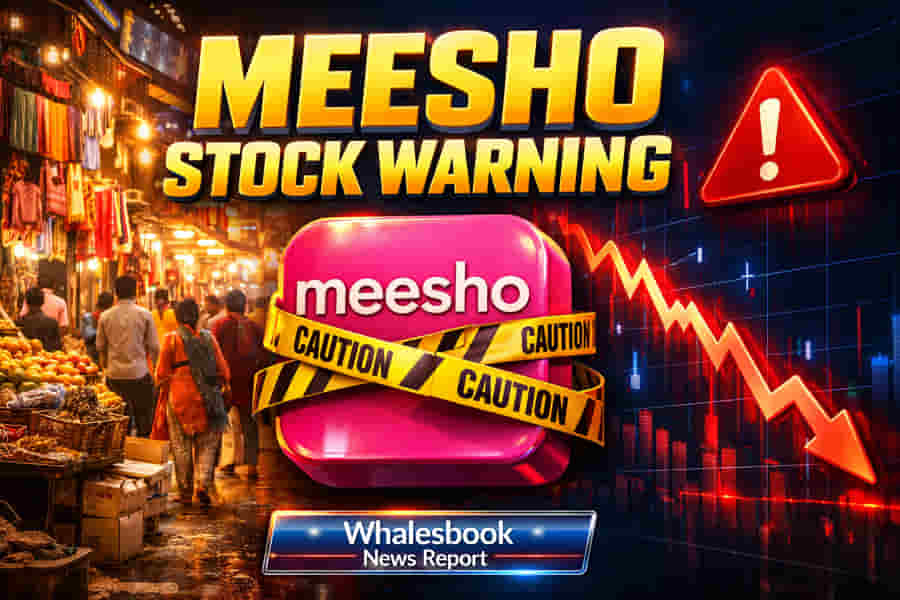
JM Financial has initiated coverage on Meesho, labeling it the 'flagbearer' of Indian e-commerce democratization. However, the brokerage advises 'Reduce,' citing stretched valuations and a target price of ₹170, implying a potential 1.8% downside. Despite strong market reach and operational efficiencies, concerns linger over stock price momentum and high cash-on-delivery orders.
JM Financial Initiates Coverage with Mixed Signal
Brokerage firm JM Financial has opened its research coverage on the newly listed e-commerce platform Meesho. While acknowledging Meesho's significant role as a 'flagbearer' in democratizing online shopping for the Indian masses, the firm has issued a 'Reduce' recommendation. JM Financial projects the stock price could fall to ₹170 per share within the next twelve months, suggesting a minor downside of approximately 1.8% from current trading levels. Investors are cautioned about potential supply pressures as the six-month lock-in period for early investors expires.
Meesho's Market Dominance and Strategy
Meesho stands as India's largest e-commerce player based on order volume and annual transacting users. Though its share of the overall Gross Merchandise Value (GMV) is modest at 7-8%, it captures an impressive 90% of the country's online shopper base with 234 million annual transacting users. This extensive reach creates a formidable volume-based barrier for competitors. The platform has successfully tailored its strategy for price-sensitive consumers in Tier 2 and beyond, deliberately lowering its Average Order Value (AOV) to ₹262 to directly challenge unorganized retail markets. Its discovery-led, personalized interface effectively mimics offline shopping habits, making it a primary digital choice for millions of first-time online shoppers.
Operational Efficiency: The Valmo Advantage
A key differentiator highlighted by JM Financial is Meesho's proprietary logistics orchestration platform, Valmo. This in-house system integrates numerous fragmented logistics partners and utilizes advanced routing algorithms to achieve significant cost efficiencies. Fulfillment costs have been reduced to approximately ₹46 per order. This operational leverage allows Meesho to maintain profitability even while serving low-margin, low-ticket categories that were previously uneconomical for digital commerce.
Financial Health and Growth Model
Operating as an asset-light, pure marketplace, Meesho avoids substantial inventory and warehousing investments. This model results in a negative working capital cycle, currently at -26 days, and consistently generates strong free cash flows. The company reported over ₹580 crore in free cash flow for FY25 and the first half of FY26, demonstrating financial resilience amid aggressive expansion. The business model is supported by self-reinforcing flywheels where high order volumes enhance logistics efficiency, lower costs, attract more sellers, draw more consumers, and drive engagement through content commerce.
Valuation Concerns Override Growth Potential
Despite recognizing Meesho's strong market position and growth prospects, JM Financial's 'Reduce' call stems primarily from valuation concerns. The stock has experienced a significant price surge, leaving little room for further appreciation and increasing the risk of a correction. The 'Everyday Low Prices' strategy, while effective for customer acquisition, limits take rates and hinders substantial profitability improvement, particularly with rising logistics and promotional expenses. Achieving margin expansion would necessitate enhanced seller monetization, advertising revenue, and greater logistics efficiency. Furthermore, a substantial 72% of orders in Q2 FY26 were fulfilled via Cash on Delivery (CoD), indicating a reliance on value-conscious buyers from smaller cities. While CoD aids penetration, it also contributes to higher return rates and operational challenges.