Budget 2026: Luxury Booms, Affordable Housing Faces Crisis

Overview
India's upcoming Budget 2026 faces a deepening housing affordability crisis, with luxury home sales surging while mass-market supply shrinks. Consultancy Anarock warns that the EMI-to-income ratio has climbed significantly, pricing out many buyers. The report urges policy intervention, including revising definition caps and reviving tax incentives, to address the growing urban housing shortage and prevent a two-tier market.

Affordability Crisis Deepens Amidst Luxury Boom
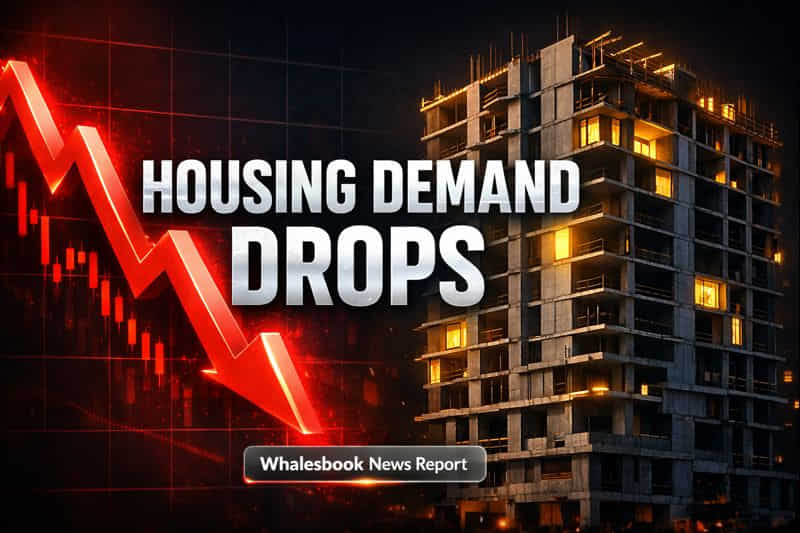
India's housing market stands at a critical juncture as policymakers prepare the Union Budget 2026. Consultancy firm Anarock highlights a deepening affordability crisis, starkly contrasted by a booming luxury home segment. While the total value of homes sold increased by 6% to approximately ₹6 lakh crore in 2025, the actual number of units sold saw a significant 14% decline. This indicates a structural shift towards high-end properties, directly impacting the supply of mass-market housing.
Luxury Market Surges, Mass Market Struggles
The disparity is stark. Affordable housing's contribution to total residential sales has plummeted from 38% in 2019 to just 18% in 2025. Conversely, luxury home sales experienced a dramatic surge of 170% in 2024, fueled by high-net-worth individuals and Non-Resident Indians. In the top seven Indian cities, the share of new homes priced below ₹50 lakh has shrunk from over 52% in 2018 to a mere 17% in 2025. Anarock estimates India's urban housing shortage at 94 lakh units, a figure projected to balloon to 3 crore by 2030 without timely policy interventions.
Housing affordability has deteriorated significantly for salaried households. The Equated Monthly Installment (EMI) to income ratio has climbed to around 60% for average homebuyers, a steep rise from 43% in 2020 and well above sustainable levels. Middle-income families now face an EMI-to-income ratio of 40%, up from 28%. In Bengaluru, a concerning 42% of prospective buyers seeking homes under ₹1 crore reported they can no longer afford them.
Policy Overhaul Urgently Needed
The core issue, according to Anarock, lies not in demand but in supply economics. Affordable housing projects yield margins of only 10-12%, a stark contrast to the 25-30% or more achieved in premium developments. Escalating land prices, construction costs, and approval delays erode viability, pushing developers towards higher-priced projects.
Budget 2026 must address outdated policy definitions. The current ₹45 lakh price cap for affordable housing, established in 2017, is now obsolete, failing to encompass viable urban projects even in peripheral locations. Anarock advocates for city-specific revisions, proposing caps up to ₹85 lakh for the Mumbai Metropolitan Region and ₹75 lakh for other major metros, while maintaining carpet-area norms.
Boosting Supply and Buyer Support
A crucial budget ask is the revival of the Section 80-IBA tax holiday for affordable housing developers, which expired in 2021. This incentive previously played a vital role in boosting supply. Anarock suggests its reintroduction for a limited window to unlock stalled projects.
Furthermore, the firm urges government expansion of the Credit-Linked Subsidy Scheme (CLSS) under PM Awas Yojana-Urban 2.0. This includes raising subsidy limits, increasing eligible loan amounts, and simplifying disbursals to counter rising interest rates. Annual CLSS outlays of ₹10,000-₹15,000 crore could support up to 2 million first-time buyers over five years. Accelerating urban infrastructure projects is also critical to unlocking new development zones and easing pressure on city cores. Without decisive budgetary intervention, India risks entrenching a two-tier housing market, pricing millions of urban households out of home ownership.